Complement or compromise? A practitioner's guide to choosing AI tools responsibly
A coach-friendly, framework-agnostic checklist of ten questions to ask before you let an AI tool near your practice — written with EMCC and ICF practitioners.

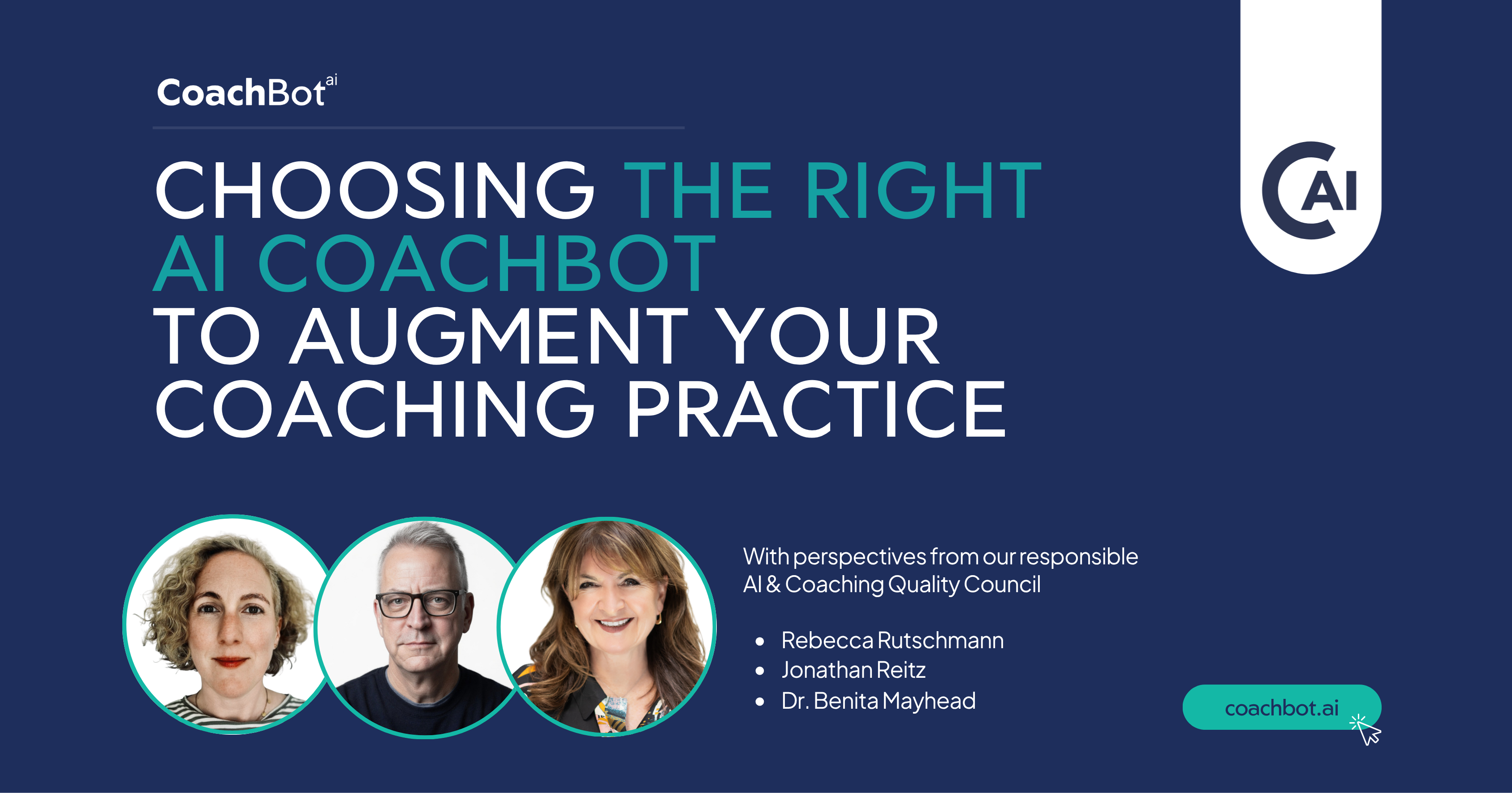
This guide is intended as a practical, coach‑friendly 10-point checklist to help you decide which AI-led coaching tool truly complements (not compromises) your coaching work in a responsible way.
AI tools are entering coaching faster than our shared standards can evolve. That creates both opportunity and risk. Many tools sound impressive. Few are designed with coaching depth, ethics, and long‑term responsibility in mind. As coaching practitioners, we carry legal and ethical responsibility for the impact of our work. It is vital to think critically.
This guide applies whether you use AI as:
a between-session reflection partner
a structured accountability layer
or a standalone AI-led coaching experience
We made this guide intentionally non‑technical and coaching framework‑agnostic. It’s meant to help external and internal coaches, coaching educators, or coaching enthusiasts ask better questions before choosing or recommending a platform for building an AI coachbot. Think of it as a reflection map vs. a buyer checklist.
1. What Problem Is the AI Tool Actually Solving?
Not every AI-powered product is designed for coaching.
Ask yourself:
Is this tool solving problems for the coach and/or the client?
Would I still use this tool if it didn’t mention AI?
Is this tool focused on general productivity or specifically designed to support real coaching outcomes?
What coaching moments does it meaningfully support (onboarding, goal clarity, reflection, accountability)?
What safeguards are in place to ensure boundaries (e.g., no therapy, no professional advice, or no general chitchat unrelated to the coaching) are maintained?
Does it claim to replace human coaching? Or does it acknowledge AI coaching is different to human coaching and deliberately complement it?
2. Long‑Term Professional Fit
The right tool should still feel right in one or two years.
Reflect on:
Does adopting this tool align with your coaching philosophy, values, professional and ethical standards?
Does it help elevate the profession — or commoditize it?
Can it grow with your practice, clients, or organization?
If this became widespread, would coaching be better or poorer for it?
3. How Structured Is Your Coaching Methodology?
Responsible AI coaching tools follow structured coaching logic, not just fluent language, and are designed to complement your existing methodology.
Ask yourself:
Does the AI operate from structured coaching logic — or simply generate fluent questions?
Is the AI tool aligned with standards and codes of ethics from leading coaching bodies such as ICF and EMCC?
Does the AI tool follow coaching basics (e.g., avoid question stacking or solutioning)?
4. How Does It Treat the Client's Inner World?
Coaching often touches clients' values, beliefs, emotions, and identity.
Reflect on:
Does the tool recognize when a conversation moves into emotional distress, trauma, mental health concerns, or crisis and clearly redirect the client to a qualified human professional?
Are there visible boundaries for emotional depth?
How does the tool support the client's psychological safety?
Does it know when to slow down — or when not to proceed?
5. How Do Humans Stay in the Center?
Human-in-the-loop is not a buzzword. It is a design choice.
Consider the following:
What happens if a client expresses distress, crisis, or vulnerability beyond coaching scope?
Is the human coach positioned as a control instance? (e.g., reviewing conversation summaries, escalations, or methodological refinement suggestions by the system)
Can coaches override or redesign the AI’s behavior?
Can coaches see how conversations unfold over time?
Does the tool support meaningful preparation and follow-up around human sessions?
If not, does it risk fragmenting the coaching journey or weakening continuity?
Is there clarity on who holds final responsibility?
Is it designed to escalate or hand back to a human when appropriate?
6. How Transparent Are the Boundaries?
Professional tools are explicit about what they can and cannot do.
Ask yourself:
Does the tool clearly state its scope and limitations?
Are disclaimers (e.g., no professional advice or therapy) understandable and clearly communicated, rather than hidden in legal language?
Are the limitations clearly defined (i.e., what it can handle and what it cannot)?
Is there a clear process for pausing or closing conversations when appropriate?
Does transparency increase client trust or create confusion?
7. Data, Privacy & Confidentiality
If coaching conversations aren’t safe, nothing else matters.
Consider whether:
Can client conversations be deleted permanently?
Is training data separated from client conversations?
Have you actually read the privacy policy and terms, and do you understand them?
Is the provider a data processor or a data controller? (learn more about GDPR here)
Is data shared with third parties? If so, to what extent and purpose?
8. IP & Professional Ownership
Your methods, language, and client work are part of your professional identity.
Look for evidence:
What rights do you grant the platform over your methodology, prompts, flows, or content?
Can your coaching IP be reused, resold, or analyzed without consent?
What happens to your content if you leave the platform? Are prompts and flows exportable?
Are coach‑created materials protected or absorbed into the system?
Does the tool strengthen or dilute your professional distinctiveness?
9. Evaluation, Testing & Quality Control
Responsible tools are tested before they scale.
Ask yourself:
Are there structured evaluation processes (e.g., scenario testing, synthetic clients, expert review)?
Are there ongoing mechanisms to detect harmful, shallow, or misleading responses?
Does the provider monitor quality over time — not just at launch?
Are coaches involved in reviewing and improving the tool’s behavior and performance?
Is learning based on evidence or merely usage volume?
10. Who Is Behind the Tool?
Before evaluating features, understand the people and incentives shaping the product.
Reflect on:
Who owns the company, and how is it funded?
Is growth prioritized over professional integrity?
Are coaches or coaching researchers meaningfully involved in product decisions?
Does the team demonstrate a lived understanding of coaching — or only AI and SaaS?
Would you trust this team to shape coaching conversations responsibly at scale?
Final Reflection
The tools will shape the profession.
The profession must shape the tools.
You don’t need to become an AI expert to make responsible choices. But as coaches, we are accountable for the outcomes, progress, and insight our clients experience, whether through human interaction or AI.
The only good reason to adopt an AI tool is simple. It helps you serve your clients more effectively and supports better outcomes.
Choosing an AI tool is not a technical decision.
It is a professional, ethical, and relational commitment.
If this guide helped you pause, reflect, or ask one better question, it has done its job.
If you found this useful, feel free to share or adapt it for your coaching network. The conversation matters more than the tool.
Jonathan Reitz
Chief Coaching Officer · CoachBot AI
MCC & ACTC · CEO and Director of Education at FLUXIFY · ICF AI Task Force
Co-authors
Dr. Benita Mayhead
Executive Coach and Coach Supervisor, EMCC U.K. Director for Coaching Practice; Doctorate of Coaching and Mentoring, and Author. Co-Founder North-52
Rebecca Rutschmann
PCC / SP, Co-founder of Viva la Coaching Academy, Researcher
Lewin Keller
Founder & CEO, CoachBot AI, ICF-trained coach (ACTP)



Keep reading.
10 September 2026
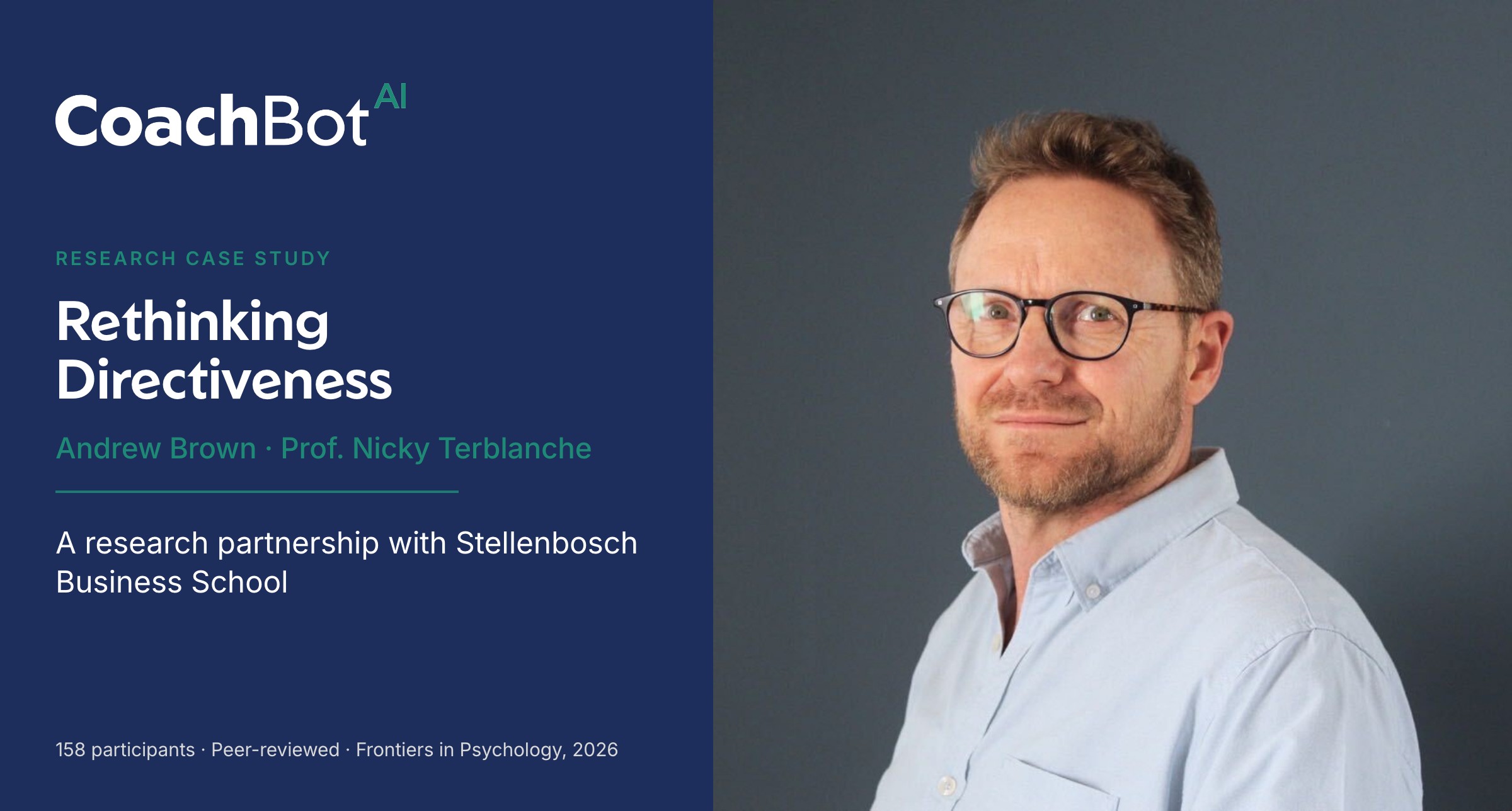
Rethinking Directiveness
Andrew Brown and Prof. Nicky Terblanche built two GROW coaching chatbots on CoachBot to test whether an AI coach has to be non-directive. 158 professionals later, the directive one came out ahead.
29 August 2026
Why Enterprise Coaching Investments Aren't Delivering — And What L&D Leaders Can Do About It
The coaching budget is not the problem. Where it lands is. What the 2026 data shows about the gap between coaching spend and coaching reach.
18 August 2026
From Boutique Expertise to Enterprise Scale: How D4S Partnership Built SOLAS with CoachBot
How a UK leadership consultancy built a proprietary AI coaching companion without compromising on IP, client trust or ICF-aligned standards — and won a landmark mandate by demonstrating it live.