Why Enterprise Coaching Investments Aren't Delivering — And What L&D Leaders Can Do About It
Executive coaching returns 5–7x, but 58% of it reaches only senior leaders — while L&D teams lose twelve hours a week each to admin.

Executive coaching delivers 5–7x ROI, but 58% of it goes to senior leaders. L&D teams lose 12+ hours a week per person to admin. The gap between coaching investment and outcome is widening, and adding more sessions won't close it. Here's what 2026 data shows, and how responsible AI infrastructure is changing the math.
The problem L&D leaders aren't supposed to talk about
Companies pour millions into coaching programs and executive development. The intentions are right. The budgets are real.
And yet, when the numbers come in six or twelve months later, the actual behaviour change and leadership impact have barely moved.
It isn't that the coaching itself is weak. It's that the model with one-off sessions, generic content, limited follow-through can't deliver lasting transformation at scale.
This is the gap between investment and outcome. Most organizations are still trying to close it the old way by adding more.
What the 2026 data shows
The global coaching market reached $5.34 billion in 2025, a 17% increase since 2023, according to ICF's Global Coaching Study. There are now more than 120.000 coaches practicing worldwide.
Executive coaching consistently delivers 5–7x ROI. That's the number L&D leaders cite to defend budget. But it hides something important.
The same ICF data shows that 58% of coaching is reserved for senior leaders, leaving only 42% for the middle managers and directors doing the heavy lifting. Below that:
41% of employees report being rarely or never coached at all
75% of managers say they're overwhelmed, leading teams without the development infrastructure they need
61% of organizations are turning to AI to bridge this but only 11% feel confident their current approach will build the future skills their people need
The will is there. The infrastructure isn't.
What's shifting in 2026
There's a surprising trend in conversations with enterprise HR leaders this year.
Many of the most sophisticated companies that went all-in on AI coaching in 2024 and 2025 are now hiring more human coaches than before.
AI scaled access brilliantly. It also exposed something hard to see when access was scarce: AI is exceptional at volume, consistency, and 24/7 availability. It cannot replace the deep human judgment, cultural nuance, and high-stakes behaviour change that only a skilled human coach can deliver.
51% of employees now prefer a hybrid model (AI plus human coach) while only 15% want AI alone.
The companies winning aren't choosing between AI and humans. They're using AI for the everyday moments and doubling down on human coaches for the high-stakes work.
AI didn't kill the need for human coaching. It proved how valuable it really is.
What responsible AI actually does for L&D
"AI in coaching" has become a catch-all term that covers everything from generic chatbots to enterprise infrastructure. They aren't the same category, and the distinction matters when budgets and reputations are on the line.
Generic chatbots with a coaching prompt jump to solutions before understanding context. They lack the methodology and ethical guardrails the field has spent decades building.
Responsible AI coaching infrastructure looks different. It's built around real coaching architecture: structured conversations, methodology that holds across thousands of interactions, an evaluation layer that produces measurable outcomes, and the privacy and governance enterprises actually require.
For L&D leaders, responsible AI does three things at once:
→ Closes the access gap. Every employee gets consistent coaching support, not just those with budget allocation.
→ Protects the methodology. A well-designed AI layer carries your framework faithfully across every interaction, whether you're supporting 10 employees or 10,000.
→ Frees the L&D team. Smart infrastructure handles the administrative weight and gives L&D teams back 10+ strategic hours per person per week.
The questions worth asking before you invest
If you're evaluating AI coaching tools, these are the questions worth sitting with:
Does this tool carry our existing coaching framework, or impose its own?
Where does our data live, who has access to it, and under what conditions?
What does the tool measure, and how does that connect to the behaviour change we actually want?
How does the tool think about the boundary between AI assistance and human-required moments?
These aren't compliance questions. They're strategic questions. The answers determine whether the tool you adopt closes your ROI gap, or quietly widens it.
The three questions worth taking back to your leadership
If you're responsible for coaching in your organisation:
What percentage of our organization has access to ongoing coaching support? That's the access gap.
What does our L&D team actually spend their week on? If more than half goes to admin, the bottleneck isn't budget. It's infrastructure.
If our coaching methodology had to scale to every employee tomorrow, what would break? The answer points to the layer that needs to be built.
Closing the gap
We built CoachBot for exactly this problem: enterprise organizations watching the ROI gap widen despite real investment in coaching.
Our infrastructure is methodology-first, meaning your existing framework carries across every interaction. It's GDPR-compliant, EU-hosted, and built for the trust requirements enterprise HR and L&D actually have. And it's designed to give L&D teams back the strategic hours that admin keeps stealing.
We don't replace coaches. We extend what they do, responsibly, at the scale of your organization.
→ Book a call with the team
Sources
ICF (2025). Global Coaching Study.
Deloitte (2026). Global Human Capital Trends Report.
Absorb LMS (2026). Together Trends Report.
Nottingham Trent University (2025). Research on coaching practitioner burnout.
Estimated read time: 4–5 minutes
Lewin Keller
Founder & CEO
Ex. Google, DoiT, Accenture · ACTP Coach · Investor & Advisor
Keep reading.
10 September 2026
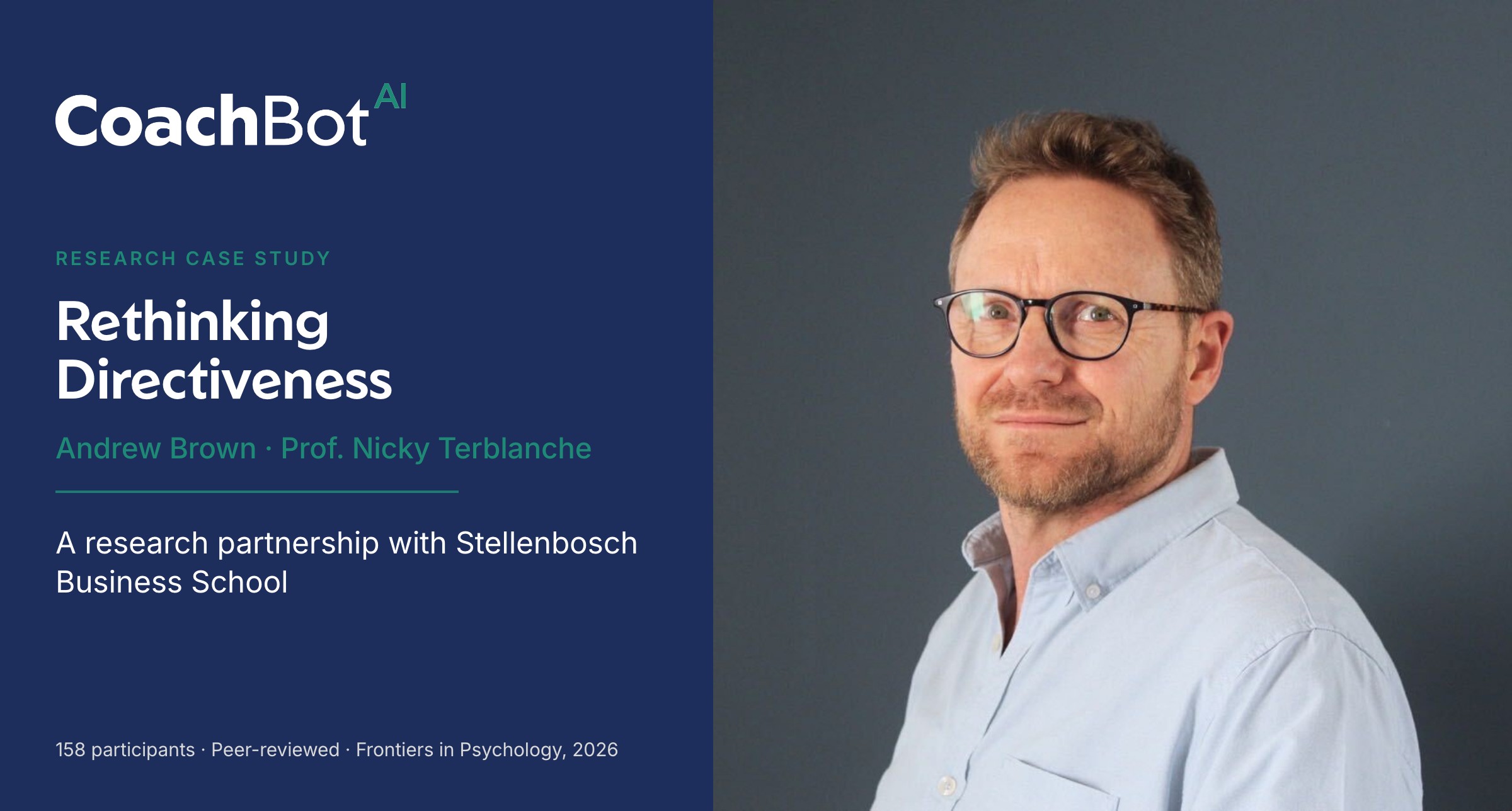
Rethinking Directiveness
Andrew Brown and Prof. Nicky Terblanche built two GROW coaching chatbots on CoachBot to test whether an AI coach has to be non-directive. 158 professionals later, the directive one came out ahead.
21 August 2026
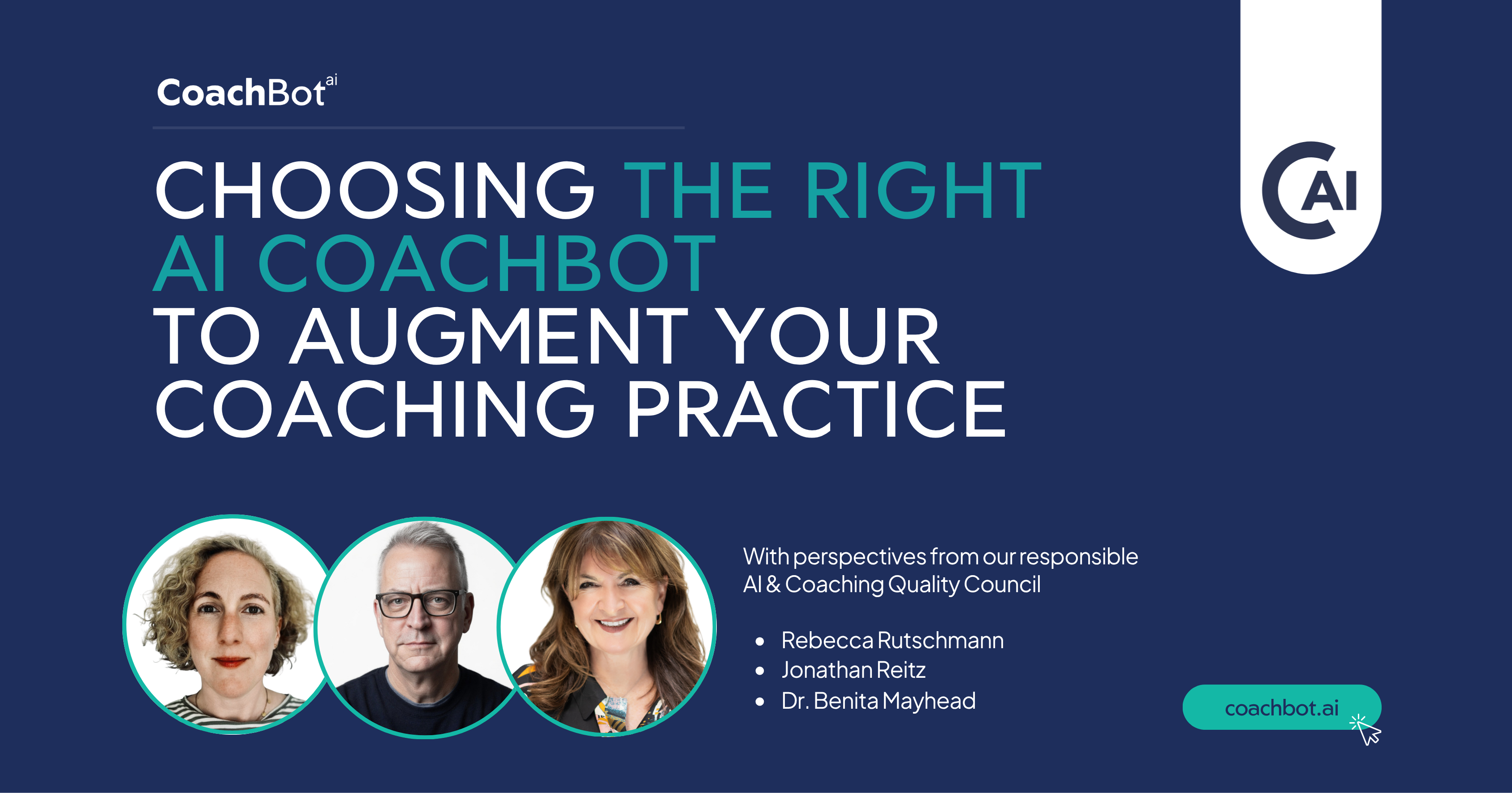
Complement or compromise? A practitioner's guide to choosing AI tools responsibly
AI tools are entering coaching faster than our shared standards can evolve. Ten questions that separate a tool which complements your practice from one that quietly compromises it.
18 August 2026
From Boutique Expertise to Enterprise Scale: How D4S Partnership Built SOLAS with CoachBot
How a UK leadership consultancy built a proprietary AI coaching companion without compromising on IP, client trust or ICF-aligned standards — and won a landmark mandate by demonstrating it live.