Executive Coaching: Transforming Leadership
Executive coaching is a focused partnership that helps senior leaders make better decisions, lead through complexity, and grow with intention. A skilled executive coach gives leaders a confidential space to examine habits, strengthen self-awareness, and turn business pressure into clearer action. For organizations, executive coaching for Leadership Development can connect individual growth with stronger teams, healthier culture, and more consistent execution.

What does an executive coach actually do?
An executive coach helps leaders improve how they think, communicate, decide, and lead. Unlike a consultant who may solve a problem for the business, a coach works with the leader so they can handle bigger challenges with more clarity, confidence, and accountability.
In practice, leadership coaching for executives often begins with a goal: preparing for a larger role, leading a transformation, improving team trust, navigating conflict, or becoming more strategic. The coach may use interviews, assessments, stakeholder feedback, reflective exercises, and structured conversations to identify patterns that are helping or limiting the leader. From there, coaching turns insight into behavior change.
That is where the value becomes practical. A leader might learn how to slow down before reacting, delegate more effectively, build a stronger executive team, or communicate priorities in a way that reduces confusion. The work is personal, but the outcome is organizational.
Coaching creates space for clearer leadership
Executives are surrounded by people, yet leadership can feel surprisingly isolating. Direct reports may filter difficult feedback. Peers may be competing for resources. Boards, investors, and employees may all expect certainty even when the path forward is unclear.
An executive coach offers a rare kind of thinking partner: objective, confidential, and focused on the leader’s growth rather than internal politics. This kind of coaching for leadership gives executives room to test assumptions, name blind spots, and prepare for high-stakes conversations before they happen.
The best coaching relationships are not soft or passive. A strong coach challenges the leader constructively. They notice when a leader avoids conflict, overcontrols decisions, or confuses speed with strategy. Over time, that honest reflection helps leaders become more deliberate under pressure.
Key benefits often include:
Greater self-awareness: Leaders understand how their style affects trust, motivation, and performance.
Sharper decision-making: Coaching helps executives separate noise from what matters most.
Stronger communication: Leaders learn to deliver clarity without creating fear or defensiveness.
Better executive presence: Coaching supports confidence, composure, and credibility in demanding moments.
More effective delegation: Leaders move from being the central problem-solver to building capability in others.
Sustainable performance: Coaching can help leaders manage energy, focus, and boundaries during intense seasons.
How is executive coaching different from mentoring, therapy, or training?
Executive coaching is a future-focused development partnership aimed at behavior change, leadership effectiveness, and business impact. Mentoring usually relies on advice from someone with relevant experience, therapy often explores emotional health and past experiences, and training typically teaches a defined skill to a group.
Those distinctions matter because leaders need the right support for the right challenge. A mentor may say, “Here is what worked for me.” A trainer may teach a framework. A therapist may help process deeper emotional patterns. A development coach asks powerful questions, provides feedback, and helps the leader choose new behaviors that fit their role, values, and organizational context.
This does not mean one approach is better than another. Many leaders benefit from more than one kind of support. But coaching is especially useful when the leader must grow into complexity rather than simply acquire information.
For example, a newly promoted executive may already understand the business. The harder shift is identity: moving from functional expert to enterprise leader. Transformational leadership coaching can help that person change how they spend time, influence peers, handle ambiguity, and lead beyond their own department.
Coaching strengthens organizations, not just individuals
The most effective coaching engagements are connected to business priorities. Coaching in the workplace should not be treated as a private perk reserved for a few senior people. When aligned well, it becomes part of a broader leadership system.
A CEO may need to lead through restructuring without losing trust. A senior team may need to make faster decisions across functions. A high-potential leader may need support before stepping into a role with larger strategic risk. In each case, coaching for leadership development helps translate organizational goals into leader behaviors.
Organizations benefit when leaders become more skilled at:
Setting direction: Clear priorities reduce wasted effort and conflicting agendas.
Building trust: Teams perform better when leaders communicate consistently and follow through.
Developing talent: Coached leaders often become better coaches themselves.
Managing change: Leaders learn to address resistance without dismissing legitimate concerns.
Creating accountability: Coaching helps executives clarify ownership without micromanaging.
The ripple effect is important. One leader who improves listening, decision quality, or conflict management can change the experience of an entire team. Over time, coaching can support retention, succession planning, and a stronger leadership bench.
Digital tools are expanding access to coaching
Traditional executive coaching is highly personalized, but it can be difficult to scale across a growing organization. That is why many companies are exploring a digital coaching platform, an online coaching platform, or a broader leadership development platform to extend support beyond the C-suite.
Technology does not replace the human judgment of an experienced executive coach. It can, however, make coaching easier to manage, measure, and personalize. A talent development platform may help match leaders with coaches, track goals, gather feedback, and connect coaching themes to learning resources. People development software can also give HR and talent teams better visibility into development activity without exposing confidential coaching conversations.
AI is becoming part of this shift. An AI coach or AI business coach can help leaders practice conversations, reflect on goals, or receive prompts between sessions. AI-powered leadership development platforms may recommend learning paths, summarize progress, or identify development themes across groups. Some organizations are also experimenting with AI agents for HR to support coaching coordination, reminders, and employee development tools.
Used responsibly, these tools can help with scaling up coaching while preserving quality. The goal is not to automate empathy or wisdom. The goal is to make coaching more accessible, timely, and connected to real work.
A useful technology-supported coaching ecosystem might include:
A vetted network of human coaches for senior and high-potential leaders
An employee development tool for goal setting and progress reflection
Coaching management software for scheduling, matching, and program oversight
A leadership development platform that connects coaching with learning content
AI-supported practice tools for communication, feedback, and decision scenarios
Clear privacy standards so leaders feel safe being candid
Choosing the right coach requires more than chemistry
A good fit matters, but chemistry alone is not enough. The right executive coach should bring a strong coaching method, ethical grounding, business fluency, and the ability to challenge a leader without creating defensiveness.
When evaluating a coach or coaching provider, look for signs that the process is both human and rigorous. Relevant certifications, such as recognized coaching credentials, can be helpful. So can senior leadership experience, assessment capability, and comfort working with the realities of executive life: pressure, ambiguity, politics, and constant trade-offs.
Consider these selection criteria:
Clear methodology: The coach should be able to explain how goals are set, how progress is reviewed, and how confidentiality is handled.
Relevant experience: They should understand the leadership level, industry context, or organizational complexity involved.
Constructive challenge: Effective coaches are supportive, but they do not simply validate every assumption.
Cultural awareness: Coaching should fit the organization’s values while helping leaders question unhelpful norms.
Measurement discipline: Progress may include stakeholder feedback, behavior goals, reflection logs, or agreed leadership outcomes.
Scalability: If the company wants a broader program, the provider should support scaling up coach access without losing quality.
It is also wise to ask what happens between sessions. Meaningful development often comes from small experiments: trying a new meeting rhythm, asking better questions, handling a conflict differently, or seeking feedback after a major presentation. Coaching works best when leaders practice in the flow of work, not only during scheduled conversations.
The coaching process turns insight into action
While each engagement is different, most executive coaching follows a practical arc. It starts by clarifying what success looks like for the leader and the organization. Then the coach helps uncover current patterns, choose development priorities, and build new habits through repeated action.
A typical process may include:
Contracting and goal alignment: The leader, coach, and sometimes an organizational sponsor agree on broad goals and boundaries.
Assessment and discovery: The coach gathers context through interviews, feedback, self-reflection, or leadership assessments.
Development planning: The leader identifies a few high-impact behaviors to strengthen or change.
Coaching sessions: Regular conversations focus on real situations, decisions, relationships, and upcoming challenges.
Workplace experiments: The leader applies new behaviors in meetings, feedback conversations, strategy reviews, or team interactions.
Progress review: The coach and leader revisit goals, examine results, and adjust the plan.
This rhythm is why coaching can be more powerful than a one-time workshop. It gives leaders both support and accountability over time. The leader is not just learning about leadership; they are practicing it in the moments that matter.
Executive coaching is an investment in better judgment
The benefit of hiring an executive coach is not limited to feeling more confident, although confidence often grows. The deeper value is better judgment under real-world pressure. Leaders learn to pause before reacting, listen before deciding, and align their behavior with the culture they want to build.
For organizations, executive coaching can become a strategic part of leadership development rather than a remedial intervention. Combined with employee development tools, thoughtful program design, and the right balance of human and digital support, it can help leaders grow at the pace their business requires.
The strongest coaching engagements leave leaders more capable, not dependent. They help executives ask better questions, make cleaner decisions, and create conditions where other people can do their best work. In a workplace defined by constant change, that kind of leadership capacity is not a luxury. It is a competitive advantage.
Lewin Keller
Founder & CEO
Ex. Google, DoiT, Accenture · ACTP Coach · Investor & Advisor
Keep reading.
21 September 2026
Why Building Your Own AI Coach Is the Easy Part
Building an AI coach is getting easier. Knowing what good coaching looks like and proving your system delivers it is the harder part. David Meehan on why.
10 September 2026
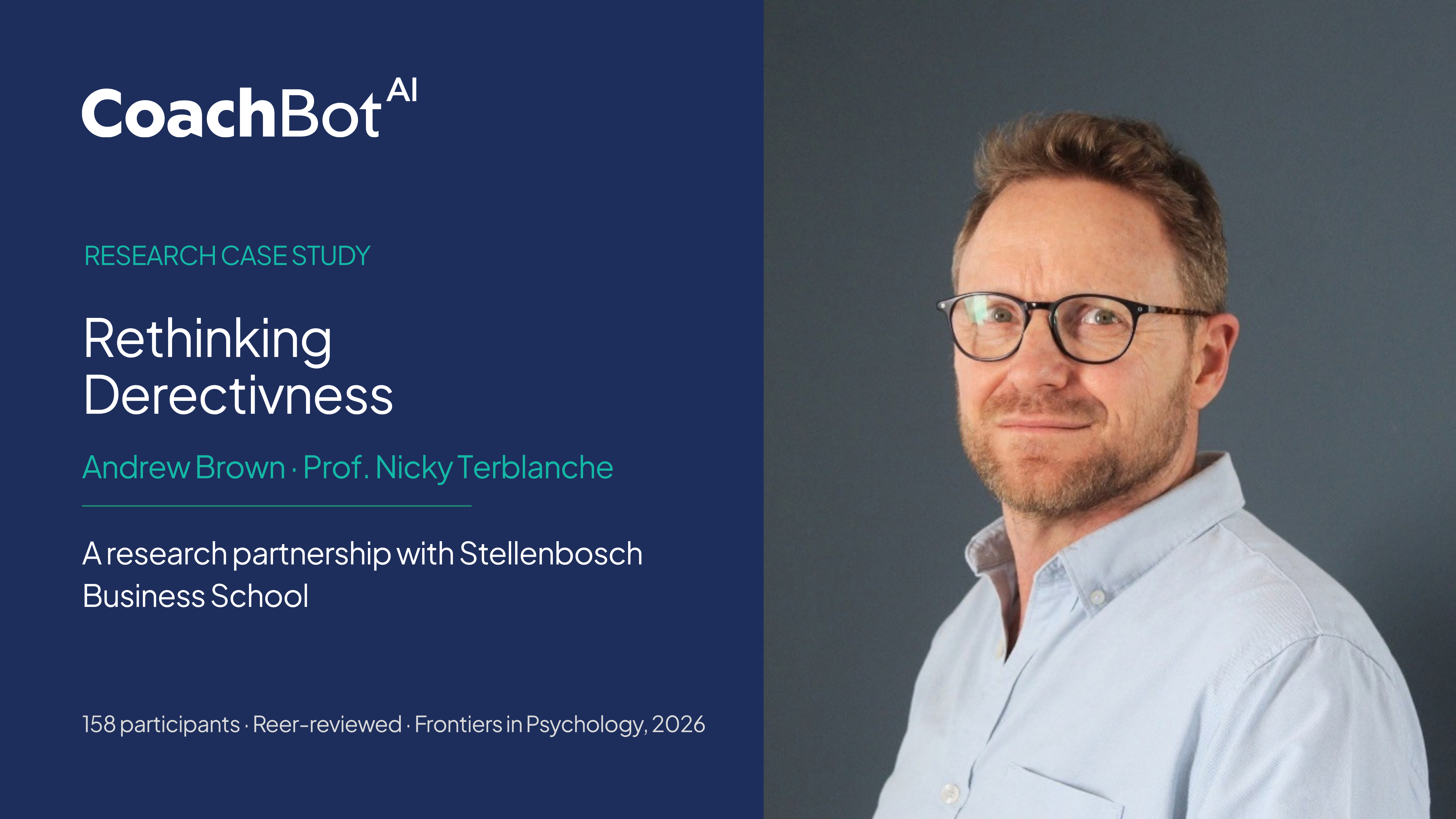
Rethinking Directiveness
Andrew Brown and Prof. Nicky Terblanche built two GROW coaching chatbots on CoachBot to test whether an AI coach has to be non-directive. 158 professionals later, the directive one came out ahead.
 52 min
9 September 2026
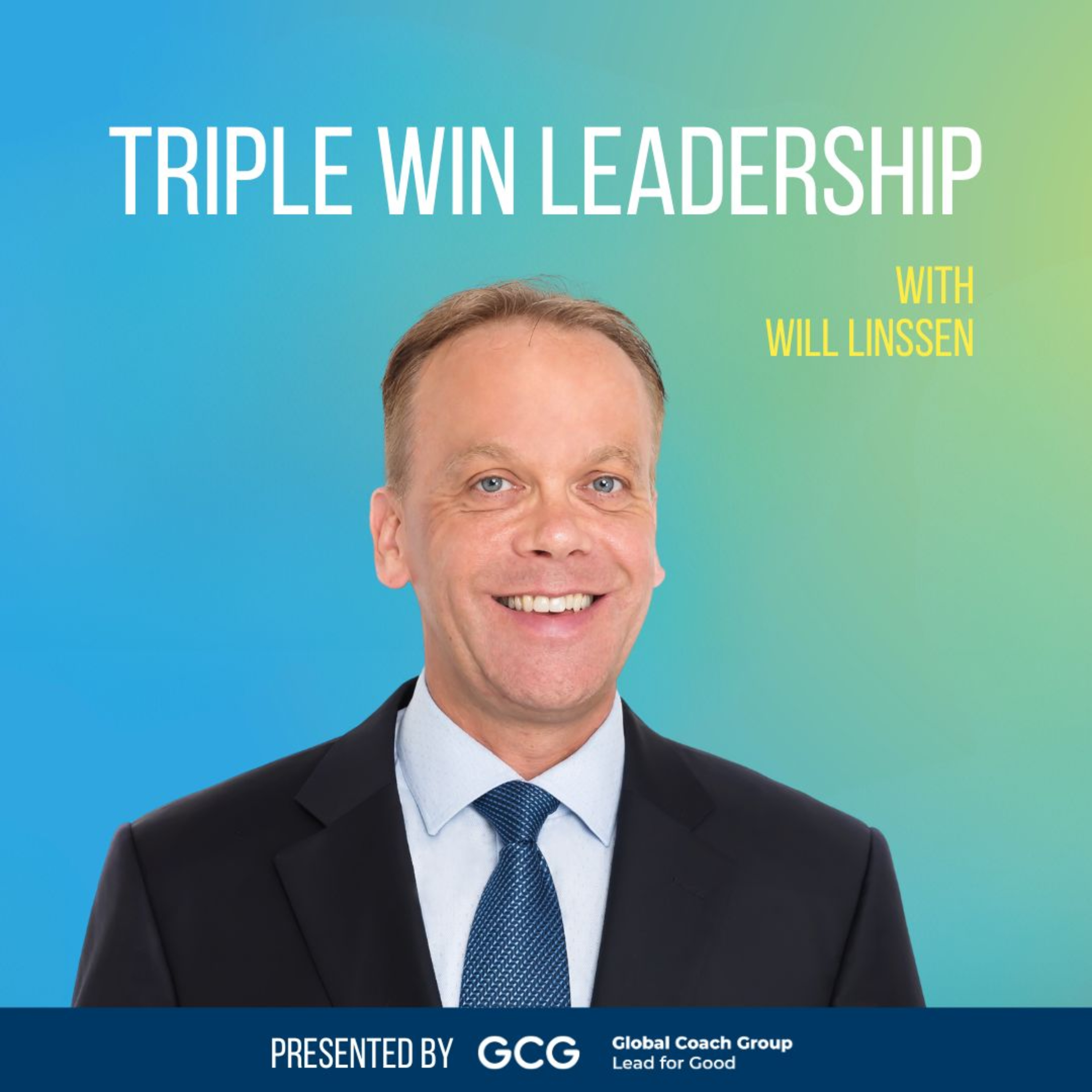
Only 10% of Your Workforce Gets a Coach. AI Just Broke That Model
A global coaching firm was ready to put AI agents in front of clients, then gave the AI to its coaches first. Lewin Keller and Will Linssen on trust, efficiency and the one thing AI still can’t touch.